
Their Place Was on the Field
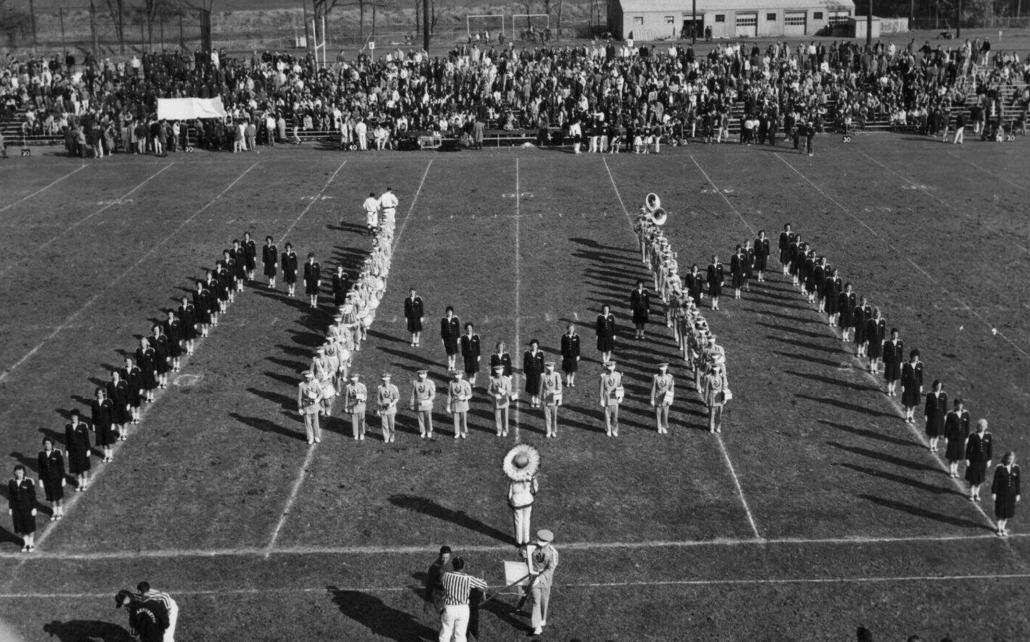
On fall Saturdays throughout the 1950s and 1960s, thousands of fans packed Alumni Field to watch UMass football. At halftime, however, many eyes were fixed not on the players, but on a group of women marching in perfect step across the field.
They were the Precisionettes.
Created in 1946 by band director Doric Alviani, the Women’s Drill Team emerged at a time when colleges across the country were rebuilding after World War II. What began as an opportunity for 24 women to participate in the university’s marching traditions quickly became one of the most sought-after organizations on campus.
The appeal was obvious. Membership meant performing before packed stadiums, traveling with the band, and becoming part of a highly visible organization known for discipline and excellence. Demand soon far exceeded available positions. In later years, nearly 200 women would audition for fewer than 30 openings.

By 1953, the group’s reputation had grown so strong that director Joseph Contino gave them a new name: the Precisionettes.
It fit.
Precisionettes trained relentlessly. They learned posture, cadence, pace, command response, and complex drill routines. Every movement was expected to be crisp. Every formation had to be exact. The result was a level of precision that became a hallmark of UMass halftime entertainment.
As the Redman (now Minuteman) Band grew in size and sophistication, so did the Precisionettes. Together they transformed halftime from a simple musical performance into a visual spectacle. Fans watched intricate formations unfold across the field while the band provided the soundtrack. For many alumni, the image of the Redman Band and the Precisionettes marching together remains one of the defining memories of game day in Amherst.
The organization reached its peak during the 1950s and 1960s. At one point, the Precisionettes numbered 60 women, including 48 performers and 12 alternates. Their reputation extended beyond the football field, and newspaper coverage frequently highlighted their performances, uniforms, and exacting standards.
Then came change.
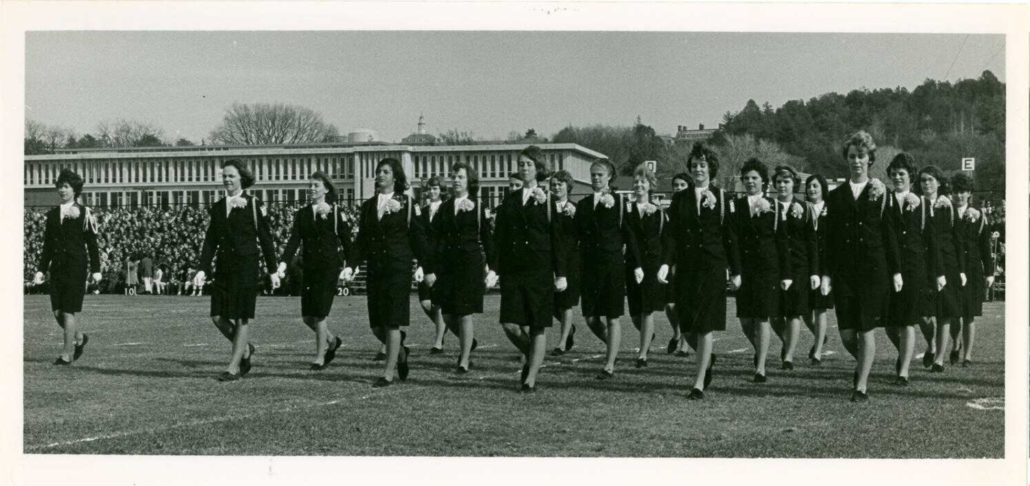
In 1963, the Precisionettes were absorbed into the ROTC program and began functioning as a military ensemble. Their performances shifted toward reviews, parades, and ceremonial events. Although the organization continued to serve the university with distinction, the role that had made them a beloved fixture of football Saturdays was evolving.
The end came quietly in September 1970 when the Student Senate eliminated the group’s funding. After 24 years, the Precisionettes disappeared from the field.
Their legacy, however, remains.
Long before women marched as full members of the Minuteman Marching Band, the Precisionettes established a place for themselves at the center of one of the university’s most visible traditions. Through skill, discipline, and determination, they became more than a drill team. They became an institution.
Today, photographs of the Precisionettes capture rows of confident young women standing at attention, their uniforms immaculate and their formations exact. They serve as a reminder of a generation that helped define the public face of the UMass Band and left a legacy that continues to be remembered more than half a century later.